Restoring a distinguished early 20th-century home in Ville-Marie
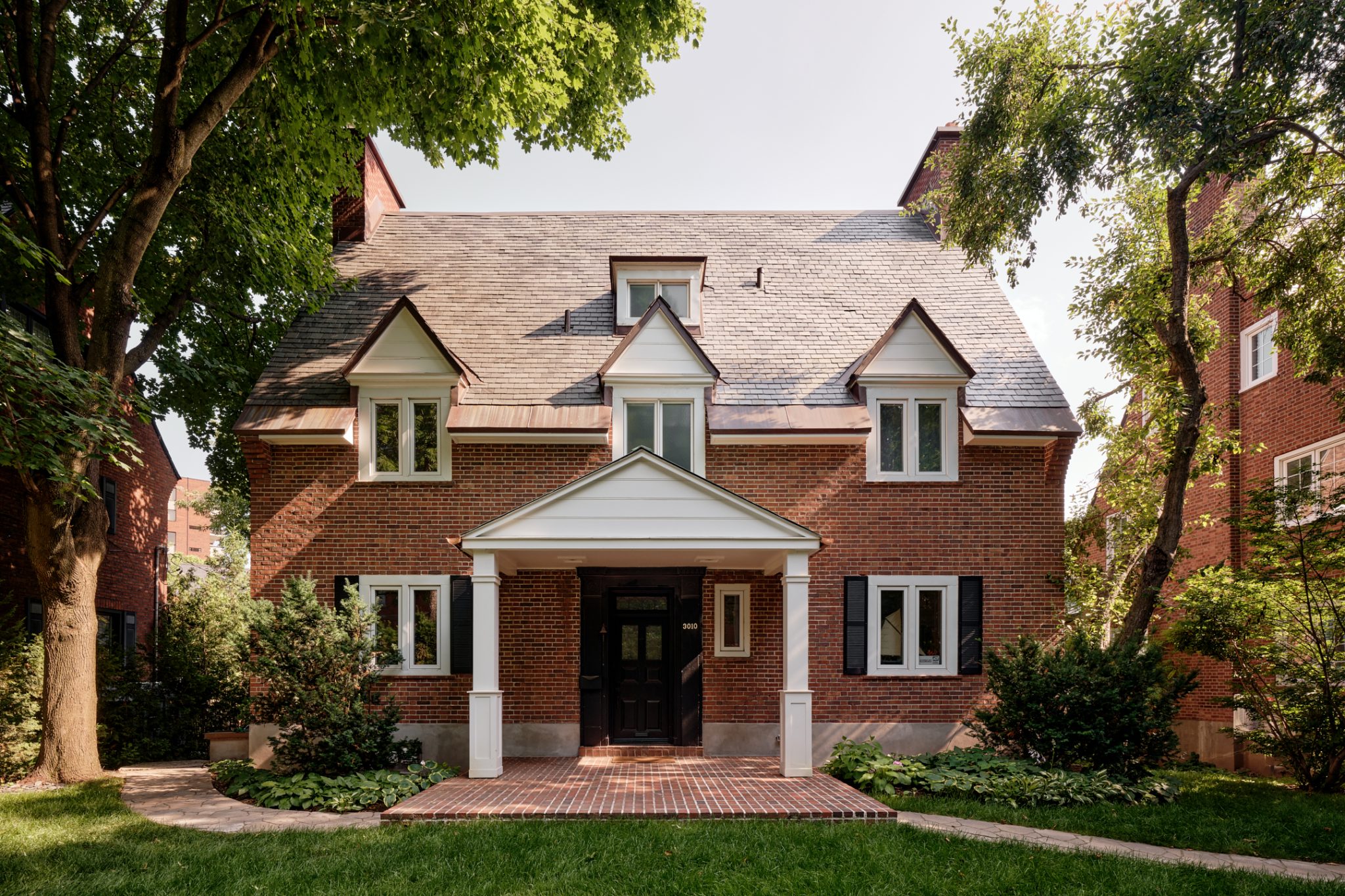
On the edge of downtown and Westmount, this colonial-style house retained much of its charm despite years of neglect and careless renovations. Before moving in, the owners sought to breathe new life into it— while preserving its character and the history of the neighborhood.
The project called for a complete interior renovation: the kitchen and two bathrooms were reimagined, the living room floors restored, the boiler replaced, and every surface repainted. Outside, the front porch was carefully restored to its original elegance.
At the rear, a generous covered terrace extends over the driveway to the garage, offering a welcoming outdoor living space. The landscape design was completely reworked to integrate the garage access seamlessly and showcase the residence. Storm windows were also considered to ensure both comfort and energy performance while respecting the home’s heritage value.
Sober yet warm, the design seeks to balance contemporary expression with the architectural richness of the house. Each intervention was conceived to reveal and carry forward the spirit of this dwelling, while adapting it to today’s way of living.
Construction of a farmhouse on a wooded lot in Vieux-Boucherville
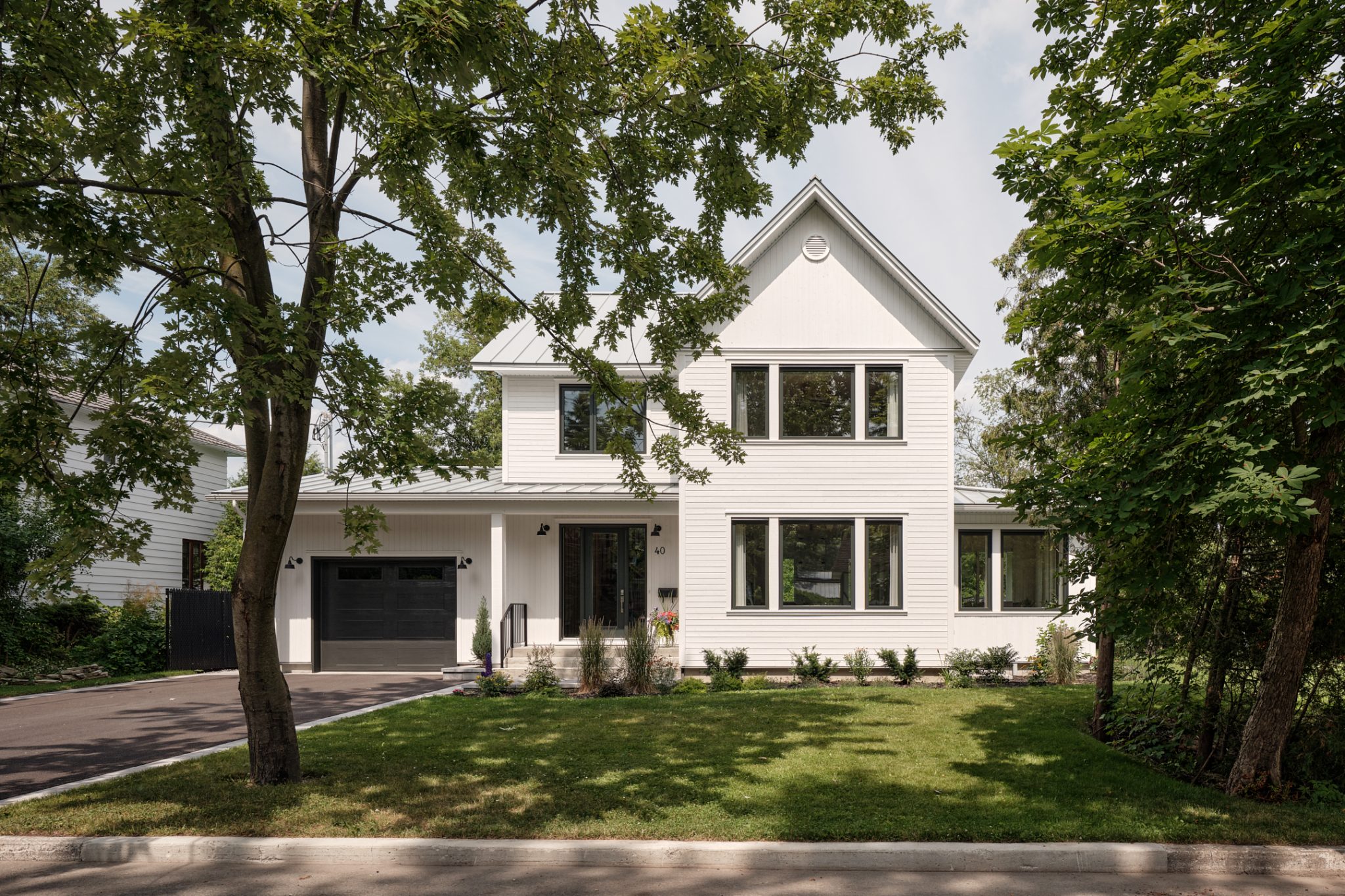
What luck ! The family had long owned the last undeveloped lot on the street, a cul-de-sac near the railway. The project: to build a two-story house, discreet and well-integrated into this suburban landscape of Canadian houses, cottages, and bungalows with varied forms. Mature trees and the natural character of the site guided the design, emphasizing views and drawing inspiration from the bucolic architecture of the countryside.
Facing the street, the house is organized around a main “L”-shaped volume, which brings together the living spaces and bedrooms. Two attached volumes—the dining room and the garage—anchor the composition on the site. Its light, material expression draws from the vernacular vocabulary of Vieux-Boucherville: horizontal white wood siding, standing-seam metal roof, and rhythmically arranged openings.
The generous entrance opens onto a double-height staircase aligned with the dining room, which features extensive glazing overlooking the tree-lined edge. The large kitchen, open to the living area, features full-height white cabinetry. The interiors, bright and spacious, evoke the spirit of farmhouses: cozy nooks, simple circulation, and a direct connection to the outdoors.
Blending nature and comfort, the house reinterprets the farmhouse spirit: abundant in light, open to greenery, and oriented towards generous outdoor spaces, it offers everything expected from a family home in the inner suburban ring !
A Family Brings New Life to the Top Two Floors of an Ahuntsic Triplex
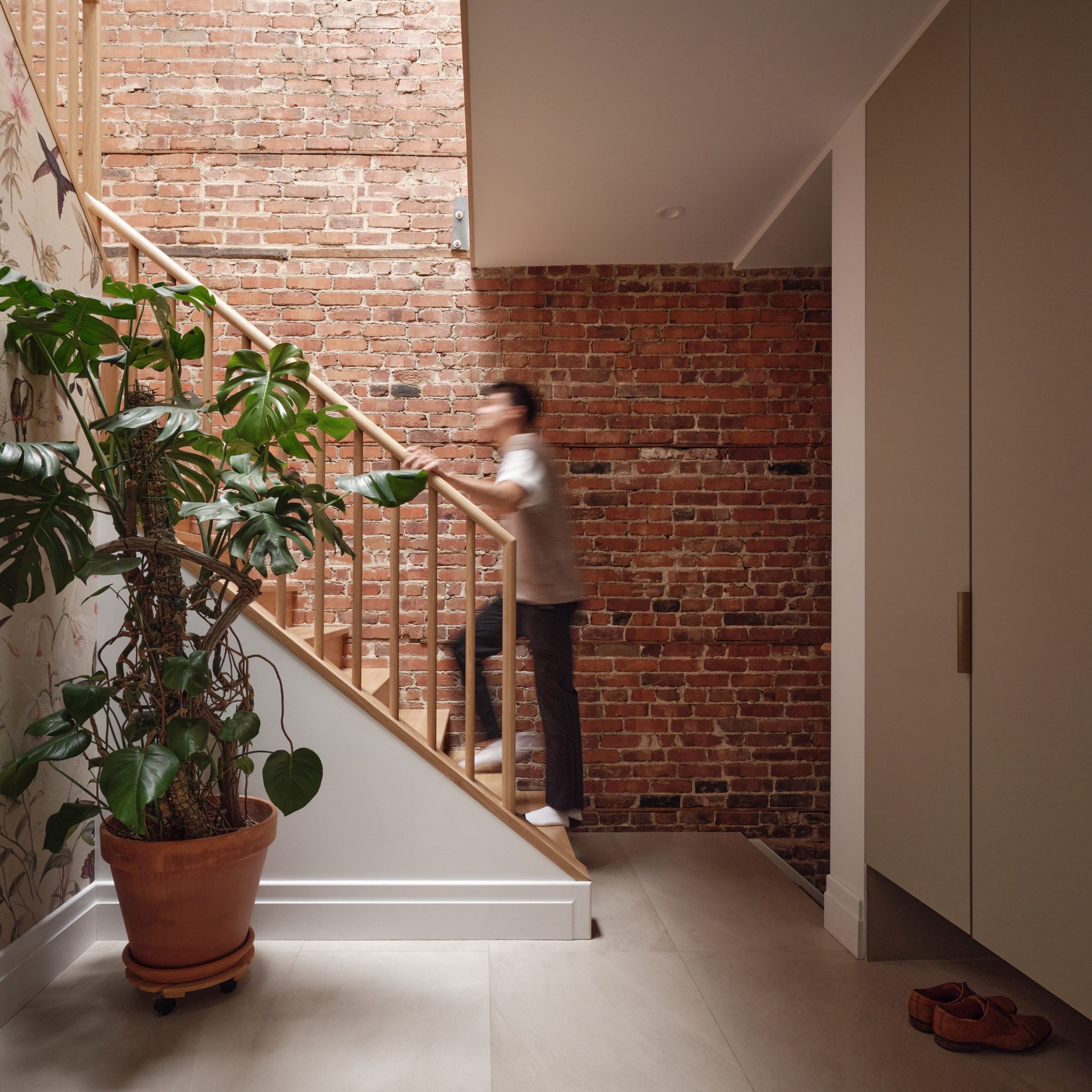
How do you settle your family into a century-old triplex without stripping it of its character? By occupying the top two floors, this young family chose to keep the ground-floor rental unit while showcasing the building’s historic charm. The goal: preserve the soul of the place while adapting it to modern needs. Painted woodwork, plaster rosettes, original brick, and period doors were carefully maintained, then paired with understated, inviting materials—light oak, terracotta, and colorful wallpapers. The result favors harmony over contrast, the warmth of embers over the abstraction of snow.
Formerly divided living spaces now open onto the backyard and its mature trees. The central staircase, opened through the full height of the home, links both floors and emphasizes verticality. Light shifts throughout the day, creating ever-changing atmospheres.
The typical central circulation of Montréal apartments is preserved, but reimagined for smoother flow. Each room naturally finds its place according to daily life. Built-in furniture—a bench, desk, and Murphy bed—maximizes every inch of space, meeting the evolving needs of the household.
The marks of the past remain intact, without compromising the comfort and functionality a city family requires. The result is a home that feels both familiar and renewed—warm, lived-in, and full of life.
One of Frelighsburg’s oldest Loyalist homes restored and expanded with a private library
On the bucolic Eccles Hill Road, a charming 19th-century Loyalist house stands proudly. It’s hard to imagine that the brick extension flanking it on the right is not part of the original construction. It is, however, the work of a contemporary architect, providing a home for the vast collection of a passionate reader!
With the greatest respect for this country heritage, the architects chose to build the extension in the Georgian style of the period. Set back from the main building, the new volume is linked to the summer kitchen by a small veranda. Its orange-red brick facades are punctuated by solid wood sash and Georgian bar windows. The solid wood frieze on the gable adorns the double-pitched metal roof. The exterior gallery that once encircled the main house has been reconstructed from historic photos found in the municipal archives. Extending into the extension, it forms a harmonious and coherent whole. Inside, the walnut woodwork and shutters contrast with the limewashed walls. High-performance insulation in the walls and roof create a soothing acoustic and thermal environment. Comfortably seated with a hot chocolate, what a pleasure to let the afternoon drift away reading and admiring the breathtaking landscape of the orchards surrounding this magnificent house !
Fifteen years later, an architect-designed house remodeled by… architects !
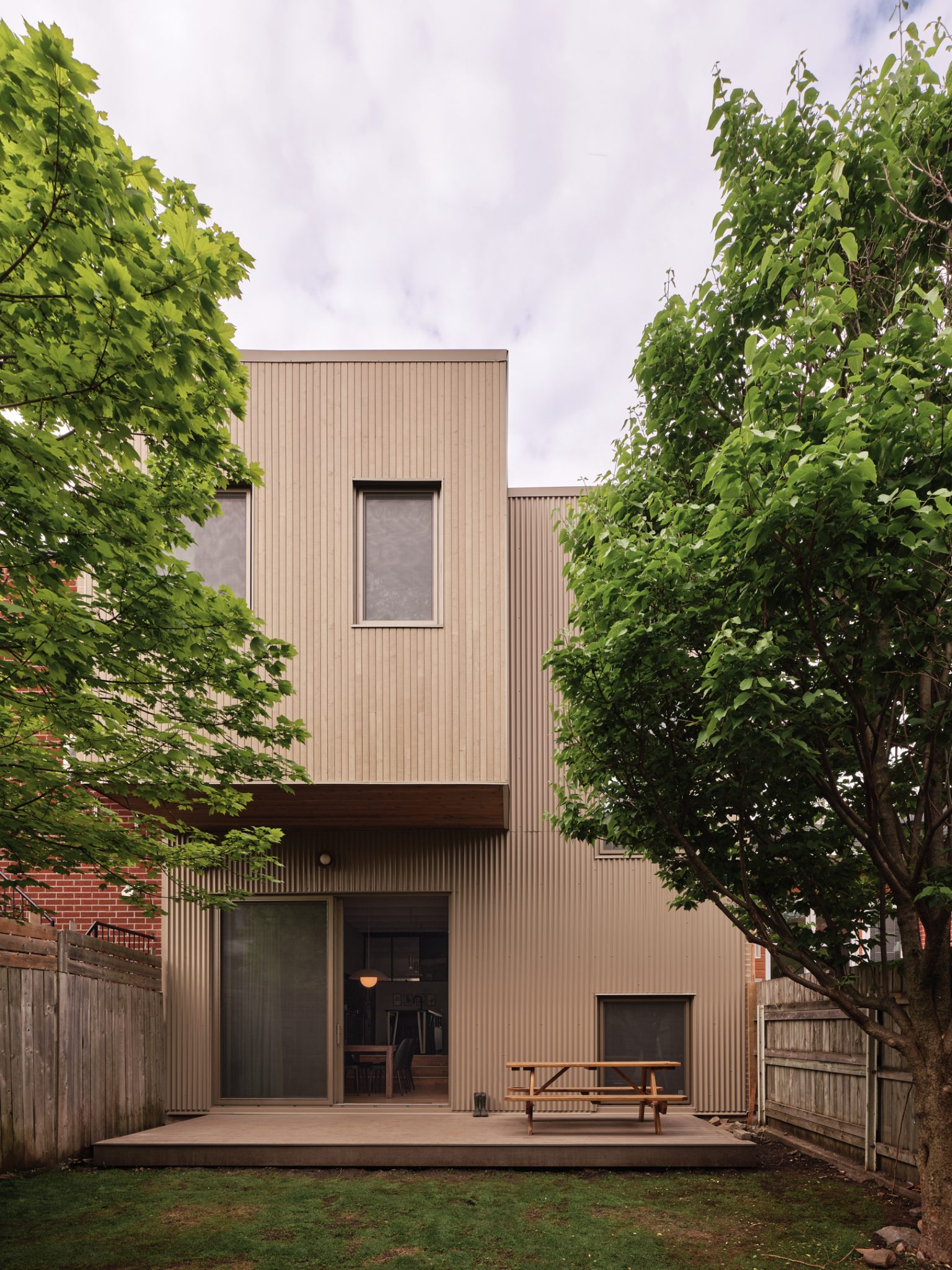
Originally extended in the backyard by Nature Humaine in 2010, this Rosemont shoebox featured a spacious double-height dining room that opened generously onto the courtyard, a stunning solid walnut island, and a mezzanine master bedroom. However, with their two growing children and the rise of remote work, the family found the space inadequate. How to expand this beautiful, award-winning single-family residence on a reasonable budget, without compromising its essence, in a context of marked inflation?
The architects responded by adding a floor to the 2010 extension, utilizing the new concrete foundation to create two children’s bedrooms at the rear. This new volume also includes a double-height living room with a large window overlooking the garden. To minimize the renovation’s impact while enhancing the original design, the kitchen and dining room were revitalized. At the front, one existing bedroom was transformed into an office, while another was upgraded to include a walk-in closet and en-suite bathroom for the parents.
Energy efficiency has been improved, ensuring the integrity of this precious gem of Montreal’s modern heritage is preserved. The Saint-Hubert residence embarks on its second life !
Three new designer townhouses replaces a run-down single-family dwelling in Villeray
In a severe maintenance deficit for several years, this post-war single-family home was already abandoned when a developer’s purchase offer was accepted. Built on a triple lot but detached from the adjoining duplex to the north, its volume was no longer in keeping with the densification of this neighborhood just a block from the d’Iberville metro station. Faced with regulations limiting construction to a single dwelling per lot, the developer chose to optimize the number of rooms per unit to accommodate three families.
Each townhouse is built on three levels, with living spaces on the first floor and the three main bedrooms upstairs. The hall opens onto a large ash closet that opens onto the kitchen. Central to the composition, the white volume of the wooden staircase leading to the first floor flanks the dining room on the courtyard side and the living room on the street side. Upstairs, the stairwell features an office bathed in natural light. The rear entrance, which opens onto the garden, forms a large landing-vestibule leading to the family room below. In addition to two guest bedrooms ideal for offices, the basement features a full bathroom and plenty of storage space. Highlighted by the beige clay brick motif and the khaki staircase, the repetition of the three semi-detached units creates a rhythmic composition on the front facade. The compact geometry of the townhouses benefits from an excellent supply of natural light, with generous fenestration on both the street and the alley. At the rear, wood paneling matching the windows crowns the upper floor. With its natural cedar bicycle garages and permeable paver play areas, the Triplettes d’Iberville has everything to please families who want to enjoy this quiet, very central residential neighborhood !
This Rosemont shoebox had already been expanded at the rear by a developer. Spacious and generously open to the courtyard, the living room gave the impression of a poorly laid-out loft. The rear facade concealed a deficient structure and water infiltration problems. In addition to redesigning the living area, the new owners wanted to add a third bedroom floor.
By proposing to integrate this additional room within the existing structure, the architects not only improved the organization of the living areas but also managed to keep costs in check. The new wooden volume utilized the high ceiling, creating a half-floor that provided ample storage space. Behind this volume, the living room was both practical and cozy, featuring a built-in cabinet illuminated by natural zenithal light. The rest of the open-plan area flowed into a spacious kitchen and dining room that opened onto the courtyard. To enhance composition and balance proportions, the high ceilings were lined with red oak chair rails. The project necessitated a complete reconstruction of the rear facade to accommodate the bedroom window and enhance natural light and ventilation in the living area. The original clay bricks were carefully dismantled and reinstated, preserving the warmth and efficiency of the renovation. This transformation exemplifies how a poorly configured space can be revitalized by expanding it from within.
Architecture and plants breathe new life into a tiny Villeray duplex
Sitting on a narrow, shallow lot, this 1940s duplex housed two dark apartments. Its old, foundation-less veranda at the rear limited natural light. In order to increase the living space and enjoy greater privacy and natural light, the owners wanted to excavate the basement, annex the first floor and extend with a mezzanine.
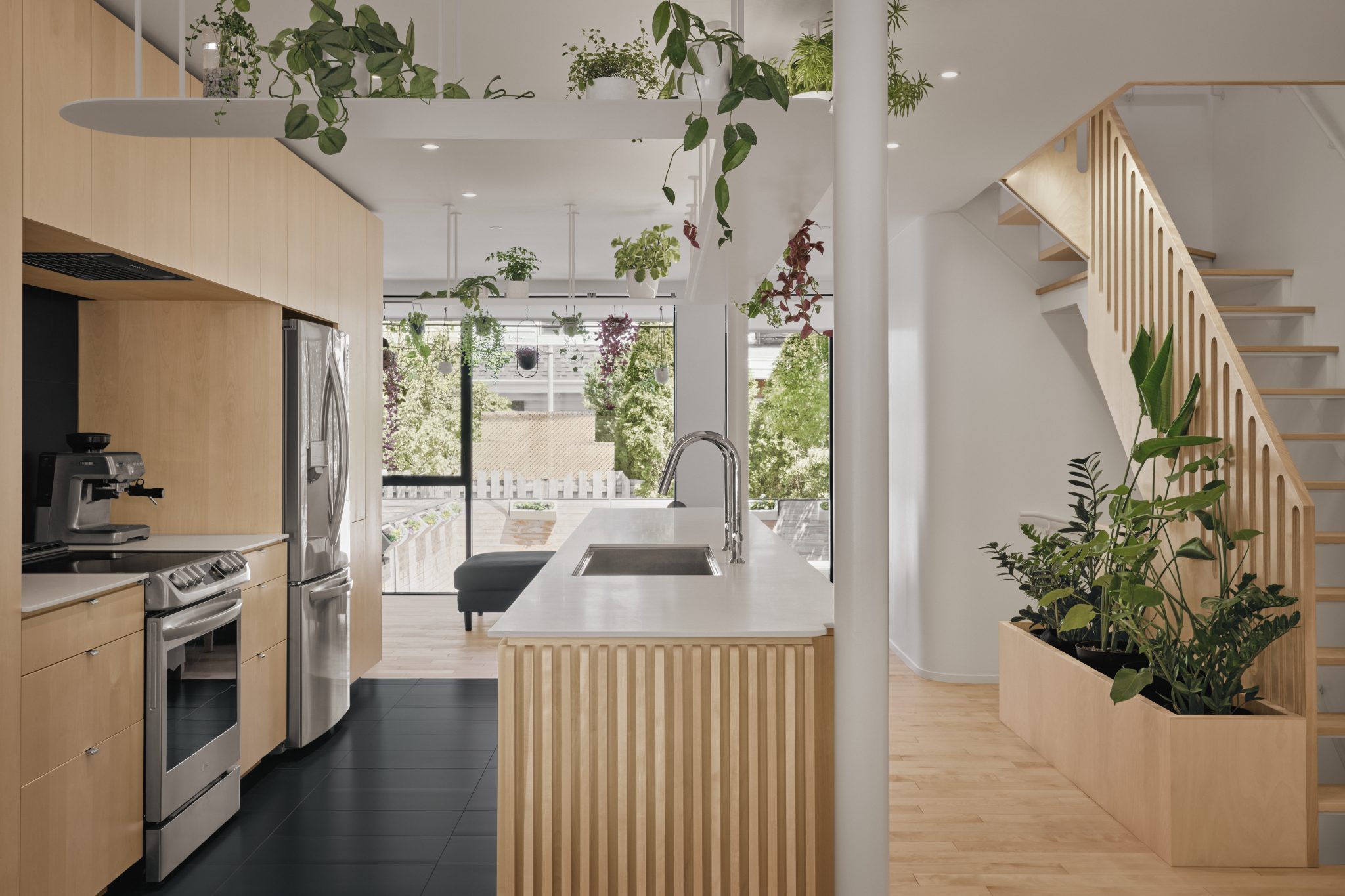
By placing the kitchen in the center of the living area and facing the staircase, two bright spaces are freed up: the living room on the courtyard side and the dining room on the street side. This atypical layout takes advantage of the beautiful luminosity of the street-facing façade, and highlights the kitchen interface and its open-plan layout. The timeless palette of white powder-coated steel, natural birch wood and slate tiles highlights the presence of green plants and maximizes natural light. Suspended shelves, large built-in bookcases and other handcrafted furnishings provide ample opportunity for home gardeners to place their beautiful plants.
The openwork birch plywood staircase with its large matching planter links the three levels, illuminated by the soft zenithal light from the glass façades of the mezzanine office. Upstairs are two large bedrooms and a shared bathroom. In the basement, a laboratory with a panoramic view of the garden is perfect for small experiments. A veritable therapy of plants and light, this major transformation enables a young family to continue living in their neighborhood without compromise. It’s happiness among plants!
A family home now part of the Terrasses de Cap-à-l’Aigle collection in Charlevoix
November 2021. The architects visit the luxurious rental homes on this breathtaking mountain above La Malbaie in Charlevoix. Cantilevers, curtain walls, floating terraces, garden roofs and recessed residences: these architect-designed homes are bursting with creativity. How do you build a rental villa that blends in naturally with Charlevoix’s imposing, craggy landscapes? How can you create a warm, family-friendly environment while limiting your carbon footprint?
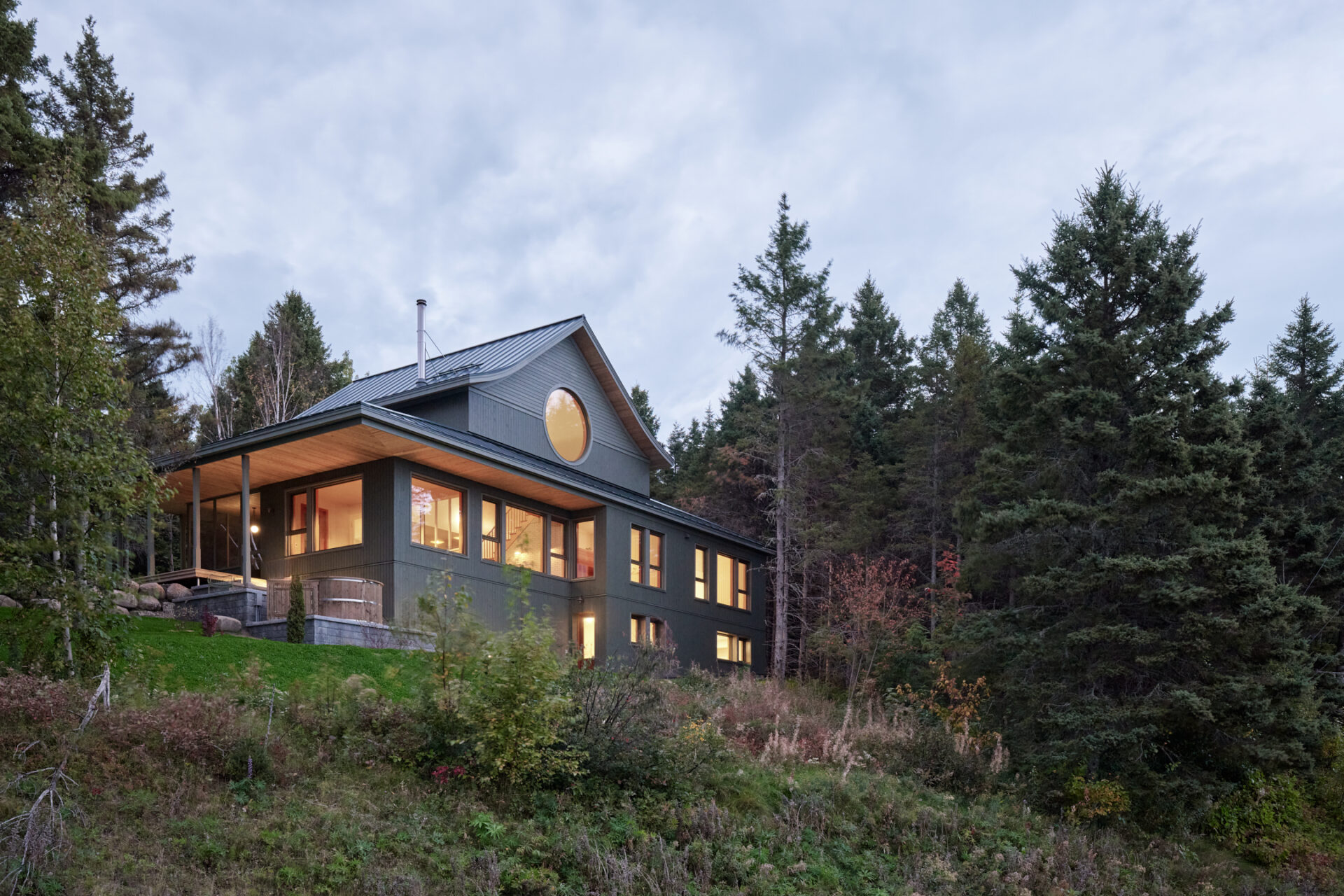
With its large gallery overlooking the river and its majestic metal roof, Le Grand Bercail evokes a sense of timelessness. A contemporary Maison Québécoise, it is as comforting as it is astonishing. Built to take advantage of the sun’s rays in winter and multiply views in all seasons, it uses its large roof overhangs to reduce overheating during heatwaves. Its hyper-insulated walls, roof and glazing (40% more than required) and excellent airtightness (0.35 CAH) make it a house that stays cool in summer and warm in winter. The delicacy of its setting between the trees and its palette inspired by boreal tones give the impression that it has always existed.
Time seems to stand still in the middle of this Plateau Mont-Royal home
Squeezed between three white gypsum walls, the kitchen was narrow and a little dark, despite its large black sliding doors opening onto the interior courtyard. In the late ’90s, the previous owner of this single-family home, architect Jean-René Corbeil, had never quite achieved his ambitions. Almost 30 years later, the new owner, an architecture enthusiast, decided to complete the work by opening up the kitchen to the living room and rectifying a series of awkward features on the upper floor.
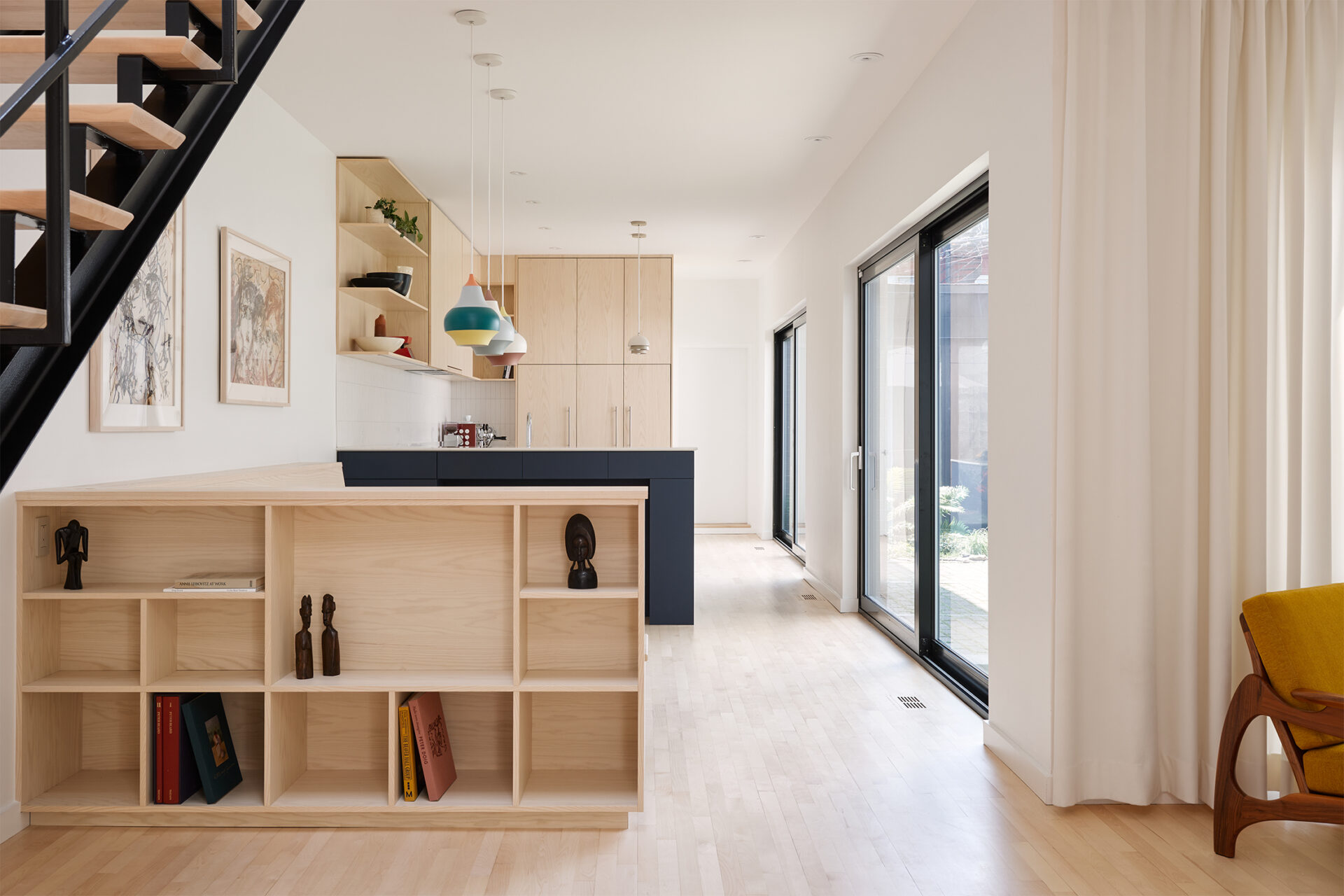
To enhance the splendor of the courtyard, the architects proposed moving the powder room next to the garage, part of which was converted into a mudroom. Flanked by a deep-blue bar and a white oak shelf-bench, the open-plan living area features the kitchen and dining room arranged in enfilade. In the hallway, the matching oak wardrobe-bench provides attractive, effortlessly accessible storage. Mosaic and stone on the upper floor add a touch of color to the overall composition. Time stands still. Enjoy it! It’s intermission!